Nine Years

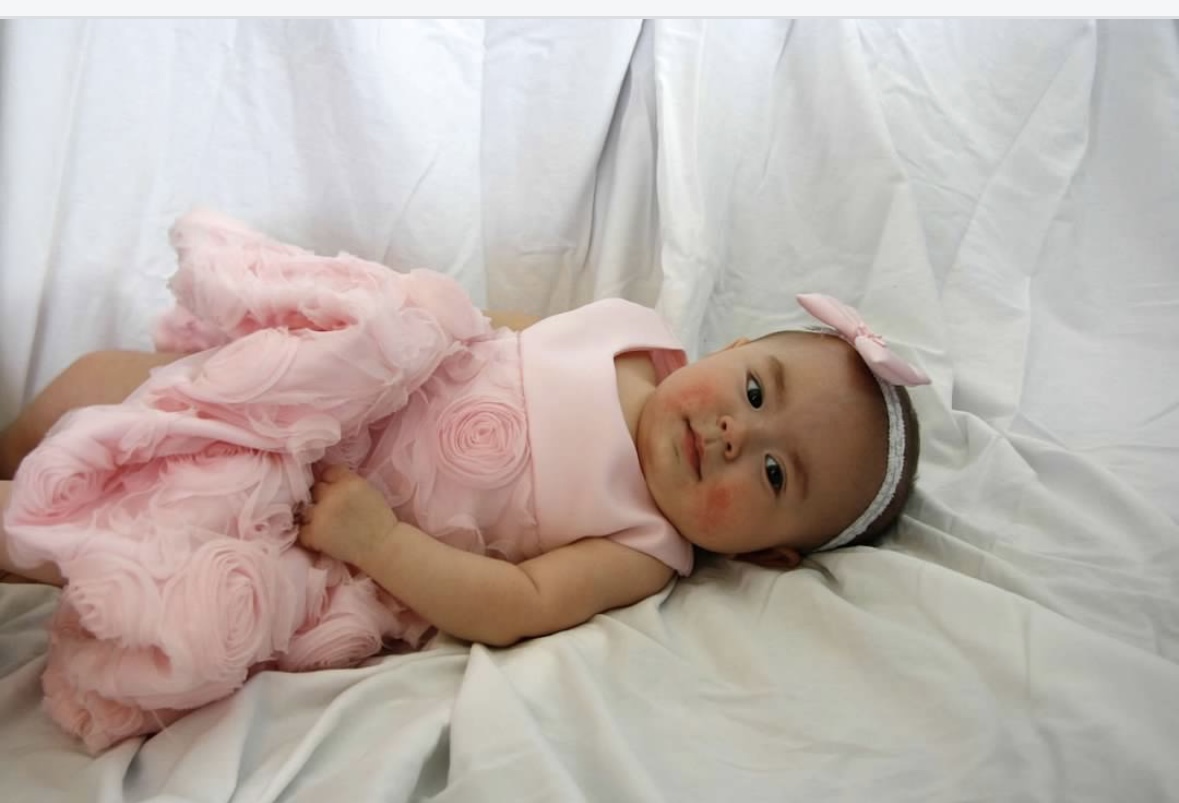
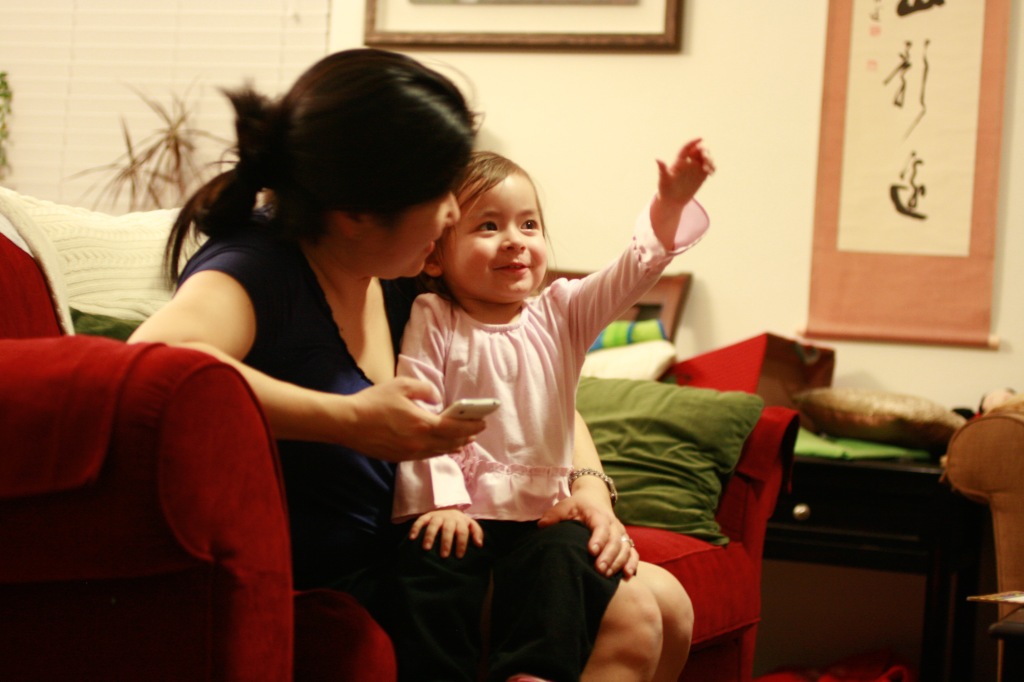
She’s seven months old here, a cupcake with a peach-fuzz top. She could sit up by then, but unsteadily, so my arm is behind her like a guardrail.

I wasn’t worried then, just harried in the way that moms with babies are. I had a to-do list like everyone else, and on that day, it included a home photo shoot of Julianna in her pretty new dress. (I’m so glad we did it. She is like a dream here…)

Safety is usually not on a parent’s to-do list because it’s instinctive, a given. When the car lurches forward during heavy braking, you don’t think about holding your arm out in front of your child: it just happens. Logically, you know that it wouldn’t work, that your arm would just break if it had to do the work of a seatbelt. You don’t dwell on it though, because the thought of not being able to protect your child is too much. 

I could not protect Julianna from her own body, but I tried to keep her safe. In the end, she didn’t need guardrails, she needed a cradle. That’s what my arms became, nine years ago today. 

Eight Years

On the day she left, she took a nap and never woke up. At least that’s how I remember it. 

It was strange, because daytime napping was not in her repertoire. She had a cold though, and I was glad she was getting some rest. After a few hours, I was worried. When the hospice nurse took her blood pressure, I knew. 

Despair — instant, undiluted, overwhelming despair — came next. Then, panic and disbelief.  There was anger too,  but it was quickly suppressed because I wanted her to know only peace in her last moments. The rest of it is a blur, but by all objective and intuitive measures, she was comfortable. I don’t even know when she died exactly, because it just seemed like she was in a deep sleep.

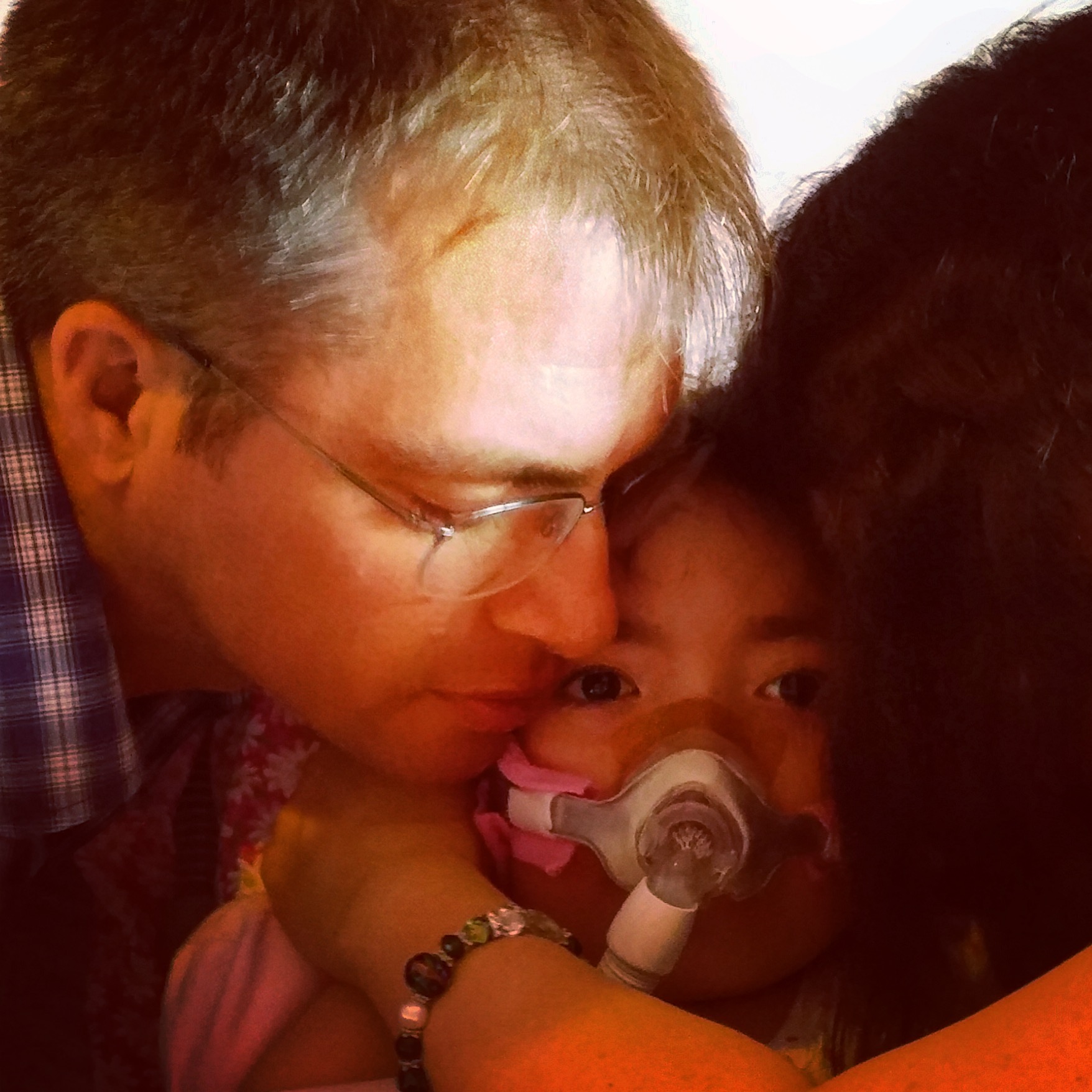
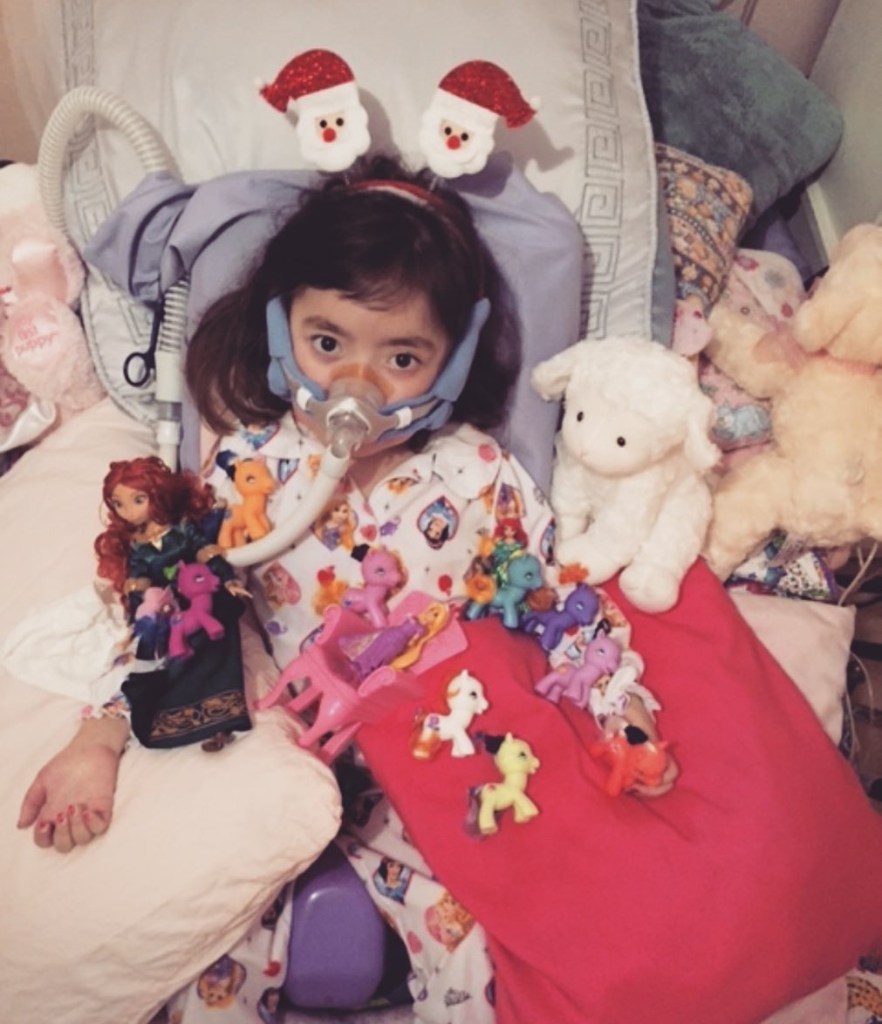
I rediscovered this picture recently.

It’s her last picture, and I avoided it for years because I don’t like the idea of a last anything when it comes to Julianna. The picture was taken shortly after we realized she was dying. When I could breathe again, I gave her the most desperate and intentional hug of my life.  My memory tells me that she was sleeping, but the picture proves that she was awake.

I don’t know what this means, other than the terrible truth that memories  are unreliable.Her memories are now older than the number of years she got to make them, and they have weakened. Some have even disappeared. It’s one of the things I hate most about the passage of time.

She’s a feeling now, stronger and bigger than my aging memories. I feel her urgency, lightness, delight and depth. Rip-apart pain, paralyzing fear, pure joy. And the Love that covers everything.

Eight years ago today. 

The Seventh Christmas

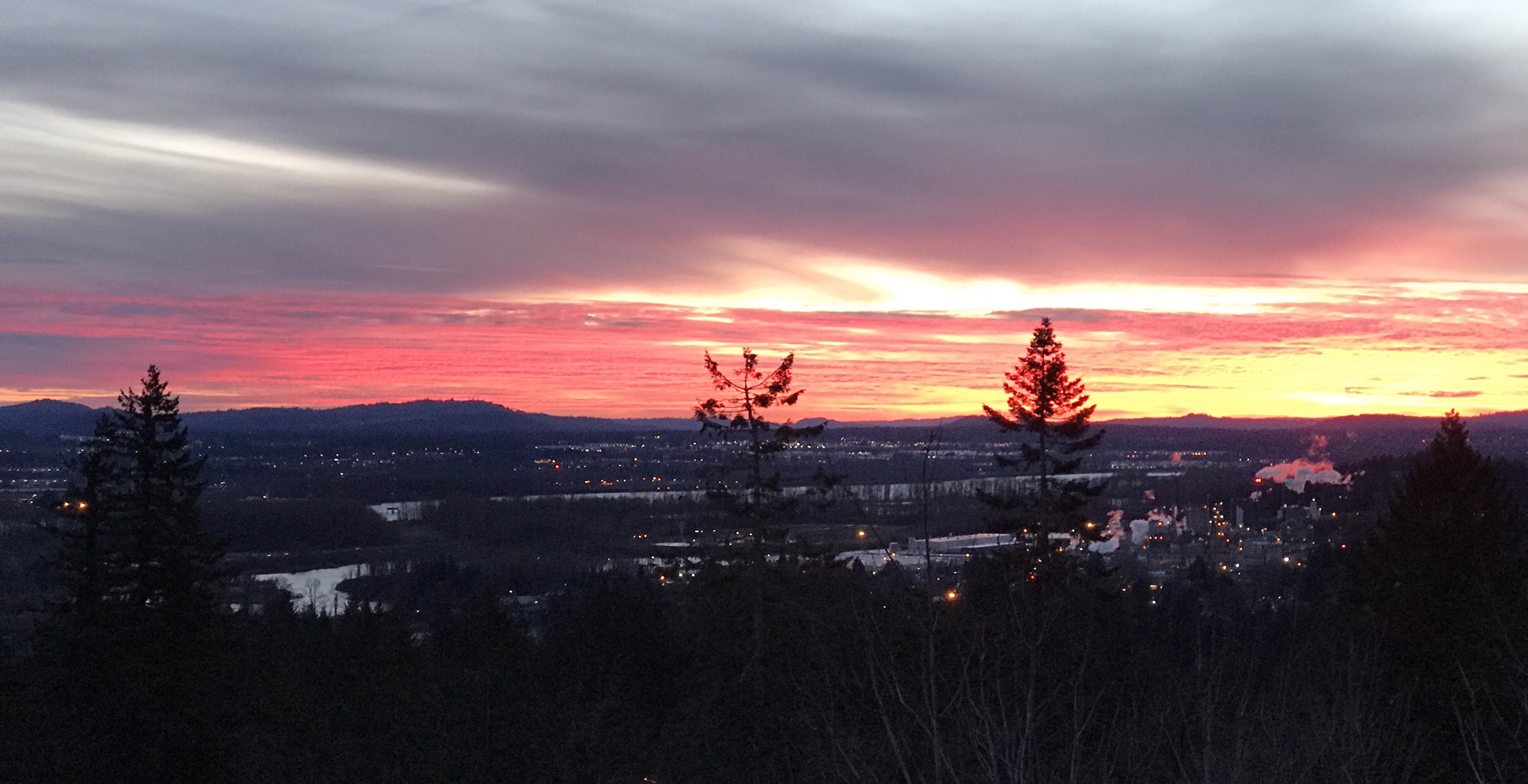
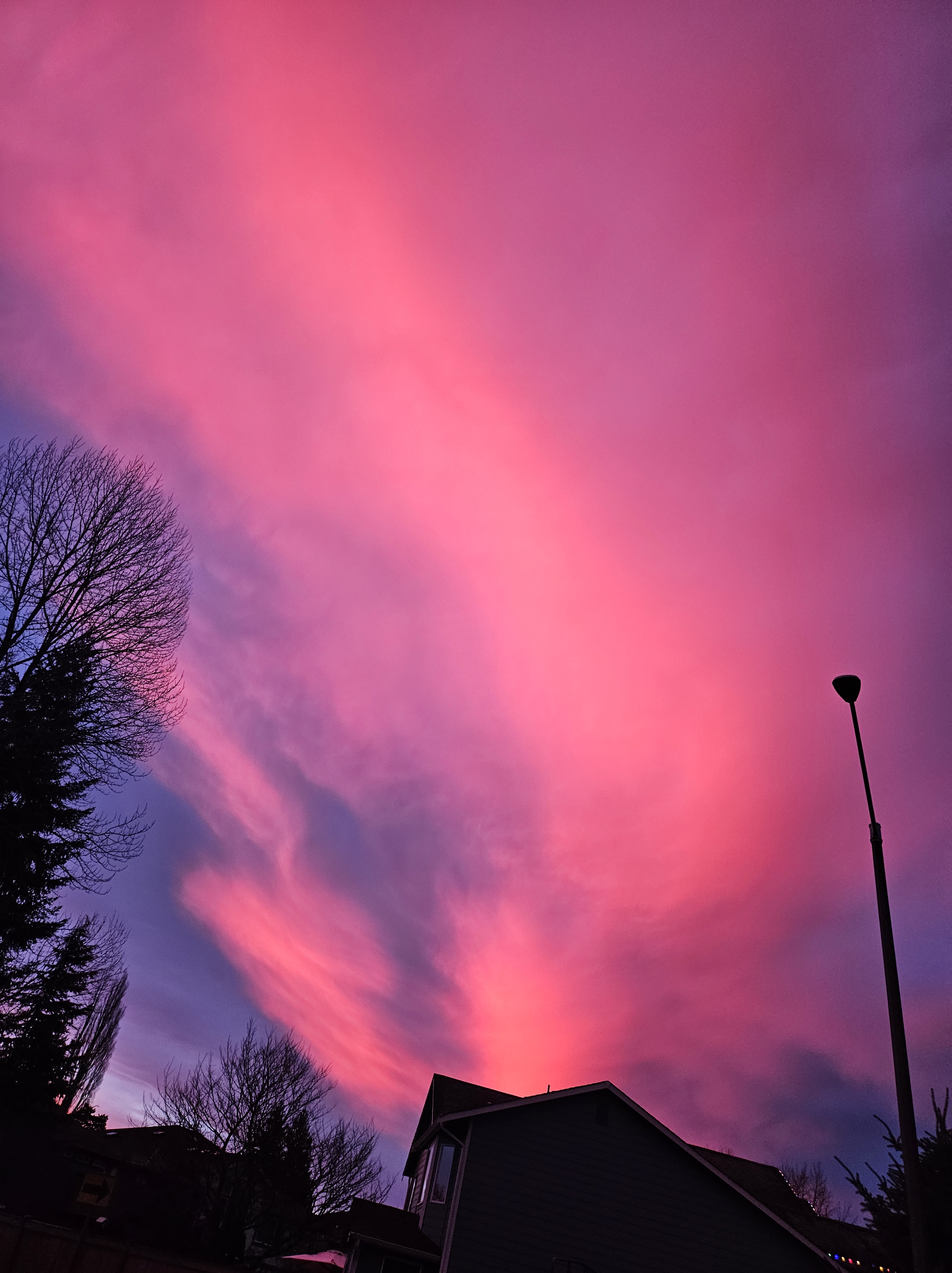
One of the things I miss most about our old house is the sweeping vista from the back porch. It faces west, and during the winter especially, we saw brilliant pink-orange sunsets that we named “Julianna sky.”

New Year’s Eve sunset from our back deck.

The view from our current house is decidedly more mundane and consists mostly of our neighbors’ yards and houses. I see glimpses of pink sky still, but they are rare and usually occur as I’m in a rush to get to work. They still make me happy, though, and I have learned to enjoy them as little reminders of what we had. 

Reminders and memories are abundant during the holidays. It’s what makes me love the season, and what makes it so hard. For me, there’s a tension at Christmastime. There’s the superficial sparkly stuff (which I love) vs the true meaning (that gets lost), the joy and pain of memories, reunion and separation, darkest night and brightest light. Grief and joy. 

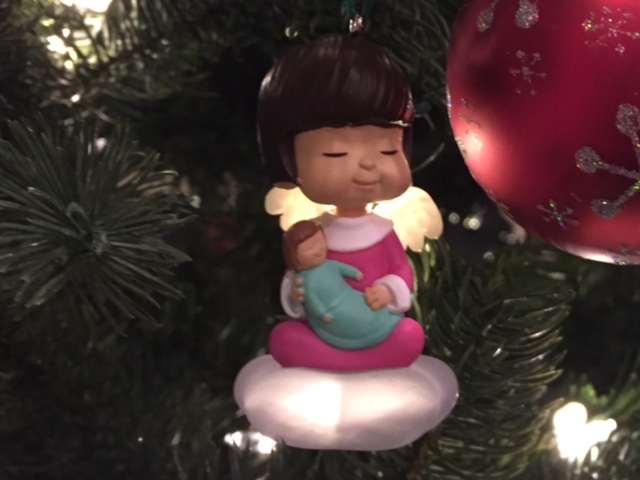
I have been missing her more lately. I feel the need to do something more intentional to remember her during the holidays. Her ornaments are on the tree and her stocking is up next to ours. There needs to be something more, though. Maybe we’ll start another tradition next year. A candle? A special tree? A Christmas unicorn? 

Then this morning, there was this:

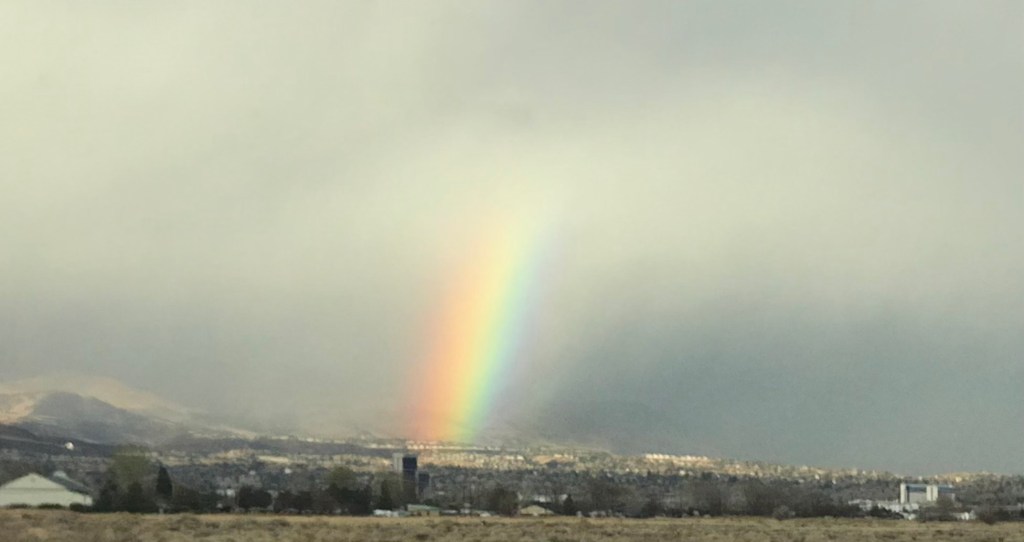
The pink sky lasts but a moment, but this one stayed for a few.

I ran to it, out of our neighborhood and into the next, the way I will when I see her again. 

“Stupid CMT” = CMT1J

CMT is a hereditary neuropathy, meaning that the nerves don’t work well because of a genetic mutation. To date, over one hundred gene mutations have been identified as causing the CMT.

Until last year, we did not know the gene mutation that caused Julianna’s CMT. At the time, she didn’t match the eighty or so mutations that were known then. She had “CMT, type unknown.” Articulate and honest, Julianna called it “stupid CMT.”

Now we know that it was caused by a mutation in the ITPR3 gene, and “stupid CMT” has a new name: CMT1J. Researchers have found over thirty people so far who have CMT1J. They live all around the world, and the severity if their disease is, likewise, all over the map. 

When I found out that the killer of my daughter had a name, something shifted. After so many years of thinking that we were the only ones, it feels strange but comforting to know that there are others. There are lots of other emotions too, ones I’m still working through. 

One of the hardest is the feeling that I have to do something about it. This is what a warrior mother would do, isn’t it? I need to make people care, throw galas, get grants, raise millions of collars and get a CURE for the disease that killed my daughter. Triumph over tragedy, heroics following heartbreak. It would make a great story. 

Here’s the truth:

I don’t know if we can do it, and it means so much that I feel frozen sometimes.

I miss her, every day, in the deepest part of me. Sometimes it feels like it only gets harder. 

I have to try. I have to at least try. 

Earlier this year, another family and I started the 1J Foundation. Our goals are to find the 1J community (affected families, researchers, supporters) and fund treatment. I added Julianna’s biography today. 

Thanks for reading. 

PS, if you like chocolate and want to help the 1J Foundation, please visit our Sees fundraising page — good until 12/1/23.

Seven years

It’s the end of another school year, and things feel unsettled. It’s always this way, with a flurry of activities that will soon give way to a slower summer.  Amidst the busyness and anticipation, there’s a curious push-pull between relief that something is ending and longing because it will be no more. Change, even when welcome, always involves loss.

Julianna left us two days before the last day of kindergarten. Her timing, like her speech, was precise and it was eloquent. During this time of change, everything changed. And the loss that comes with change, it turns out, is proportional.

On the bus, one of just a few times she went to school in person. I often wonder what kind of student she would have been. My guess — very brilliant but easily bored.

“Remember Julianna always,”

she said, probably a dozen times scattered throughout her last year. It always caught me off guard. We’d be picking flowers or creating drama between her beloved little figurines, and she’d say it, those jarringly prescient, gorgeously tender words. 

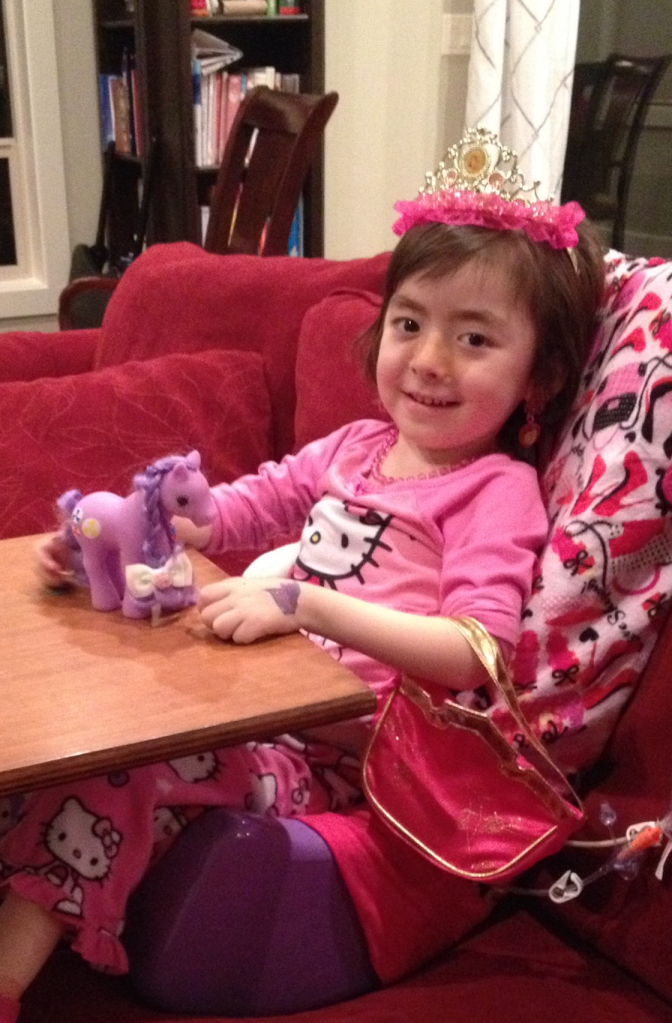
She made sure her toys were well-accessorized, just like her.

She said it to her nurses too. They would tell me about it through tears, and with always the same response.

“How could I ever forget her?”


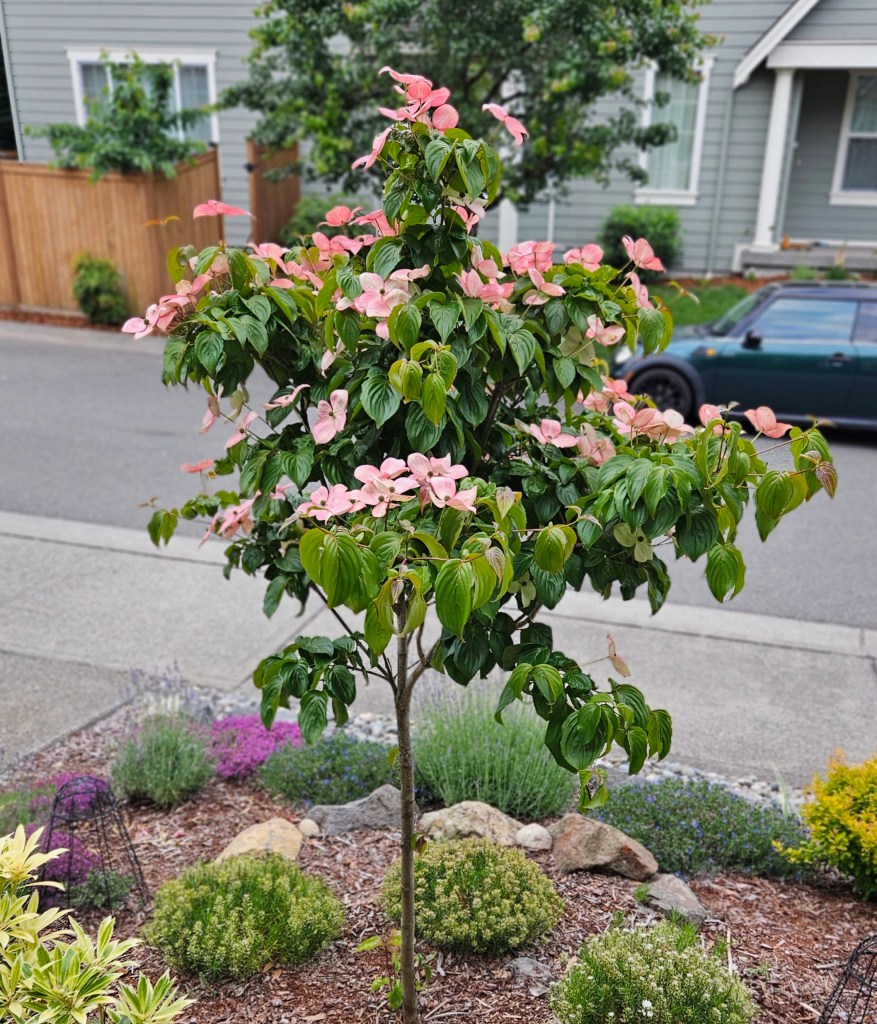
Two years ago, we moved from the house that was Julianna’s last home. We left her dogwood tree there, the one that blooms pink flowers every June.

We planted a new dogwood tree in our new front yard. In its first summer, it bore a single, sad looking little flower. 

This year, it’s done more. It’s settling in, a constant during change, helping us remember her. 

Six Years

She was not quite six years old when she left me
Six years ago today, exactly

It happened some time this year
the switch, the exact moment
I started having more time
Without her than with

I could have done the calculation
even now, I could figure it out
to the minute, probably
But I didn’t and I don’t

When my loss was fresh, I counted
How many hours, days months
since her last haircut or Christmas or hospital stay?
I kept a record of something that happened
To someone who matters
a merge of past and present tense
No future
All I could do then was hold on

I count still, but less
I hurt still, but differently
Less fire and turbulence
More longing for something that only gets further away

The sacred space (because she was there)
The sacred time (because we knew it was finite)

FIVE YEARS

It starts in the springtime, a heaviness that whispers “It’s coming again.”

As things start to bloom and the days grow long, I think of her last months, when her body was fading and her time, always short, ran out. 

It’s different this year, maybe because I’m separated from her by both time and distance. We’re out of our home, hundreds of miles away from the pink petals of her Korean dogwood and the glittery walls of her princess room. A room that has witnessed your purest joy and deepest pain is more than just a room, just as June 14th, the day that marks the anniversary of something sacred and terrible, is not just a day.

Julianna’s dogwood, last summer.

I wonder if there’s been an hour, even one waking hour, during these last five years when I didn’t think of her. 

I doubt it, this year especially. Time and distance mean that some memories fade and there are less physical reminders of her time with me. The work I’m doing though, caring for people with failing bodies and shortened time, makes me think of her more. 

She’s there, in the hard conversations and the held silence when there are no words. She reminds me that patients are people with dreams and imagination and stories and that these things need tending. She makes me want to do more for their loved ones, because being a caregiver is harder than anyone can imagine. She helps me bear witness to suffering — because it gives meaning to my own. 


And so we’re here again, another June 14th.

I’m at another crossroads as my fellowship ends. A new job in a new city will take us away again from the home we made with her. The thought of leaving it (permanently this time?) feels overwhelming, so I avoid it. 

 I know, though, that a physical home does not contain her, no more than her physical body ever could. I’m grateful to her body for the five years it allowed her here, and grateful that she is free of it now. 

It happened five years ago today.

Ten

She would have been ten today.

Like any mother, I remember her in phases: the colicky baby, a vivacious toddler, my astonishing child.

Phase four and beyond exist outside of memory,  in a murky and perilous space where everything is possible but nothing is real. Visits there are fleeting, because whether you call it unimaginative or realistic, I have never liked spending time on things that have no chance of being. 

For Julianna the two weren’t mutually exclusive. She lived in the intersection between imagination and reality.  How else to explain a five year old who could take us for a ride on her bed turned magic carpet and also articulate the loss of higher cortical function that comes with death? (“When you die, you don’t do anything. You don’t think.”) 


I’ve dreamed of her just twice since she died.

In one, she was sick.  It was one of those dreams that goes on and on. I woke up with my heart in my throat, but I don’t remember any of the details. I don’t know where we were, why she was sick, or anything we did. I only remember the feeling, the horrible, hopeless feeling that was my reality for years.

IMG_1345

The other was a flash, but I remember everything. I was in a high rise in Seoul visiting relatives. She came through the door with windswept hair, a mischievous  smile– and hands full of shopping bags. She had two purses (Julianna was never afraid of excess), and they were worn cross-body style so that her hands were free to carry said shopping bags. She wore pants and pink sneakers, and I understood in an instant that she was very busy.  She had a lot of ground to cover, and a fussy dress would just be in the way. She didn’t say a word, but gave me one look with the sparkling eyes that I know so well, and she was gone. 


Two dreams,

both as real as the earth below and sky above. I lived one and know the other, the way I know the curve of her forehead and the feel of her little hand in mine. Truth is in both of them, but the first is grounded in fact and the second could be perceived as fantasy, the subconscious yearning a a grieving mom.

After ten years of being Julianna’s mother, I know this: some truths, the deepest ones, can’t be felt with our hands or seen with our eyes. To live well in this world, with all of its pain and brokenness, you have to know the other one, the way she did.

Out of all the gifts she gave me (and there were so many), the greatest was a glimpse, an undeniable vision, of the reality to come.  I will see her again, in a place beyond time, imagination and frailty.

So on the day she would have been ten, I remember and mourn, anticipate and give thanks. More than anything else, I am blessed because there was a girl named Julianna.

Will I be your little girl even when I’m a queen? When I’m a giant?

Julianna Yuri Snow

Four Years

Seven Junes ago,

we moved from the desert to the Pacific northwest. Julianna’s care was getting more and more complicated, so we moved to be closer to family. We left one hundred degree days for sixty degree ones, sand for evergreen, established jobs for uncertainty. 

IMG_1049

One of our first weekends in Washington.

I have moved twelve times since leaving home for college. Moves are always stressful, but when young children are in the mix, they are doubly, maybe triply so. And when one of them is medically fragile, the stress is exponential. 

We bought a house with wide halls,  because we knew there would be a  wheelchair in our future. We installed a power generator, because she depended on a machine to breathe at night. Her medical team was already in place, because I did the research months before. 

So many moving parts, because we had to keep Julianna healthy. I didn’t let myself think about the alternative, but it fueled everything I did with a sense of urgency bordering on desperation. I organized and executed because her life —  my heart —  depended on it. 


Six Junes ago,

we were in hell. The thing I didn’t let myself think about was happening: Julianna was dying. I couldn’t face it, but I knew it, deep in my bones and gut and soul. It would have been easier to die myself, but she needed me. 

IMG_7140

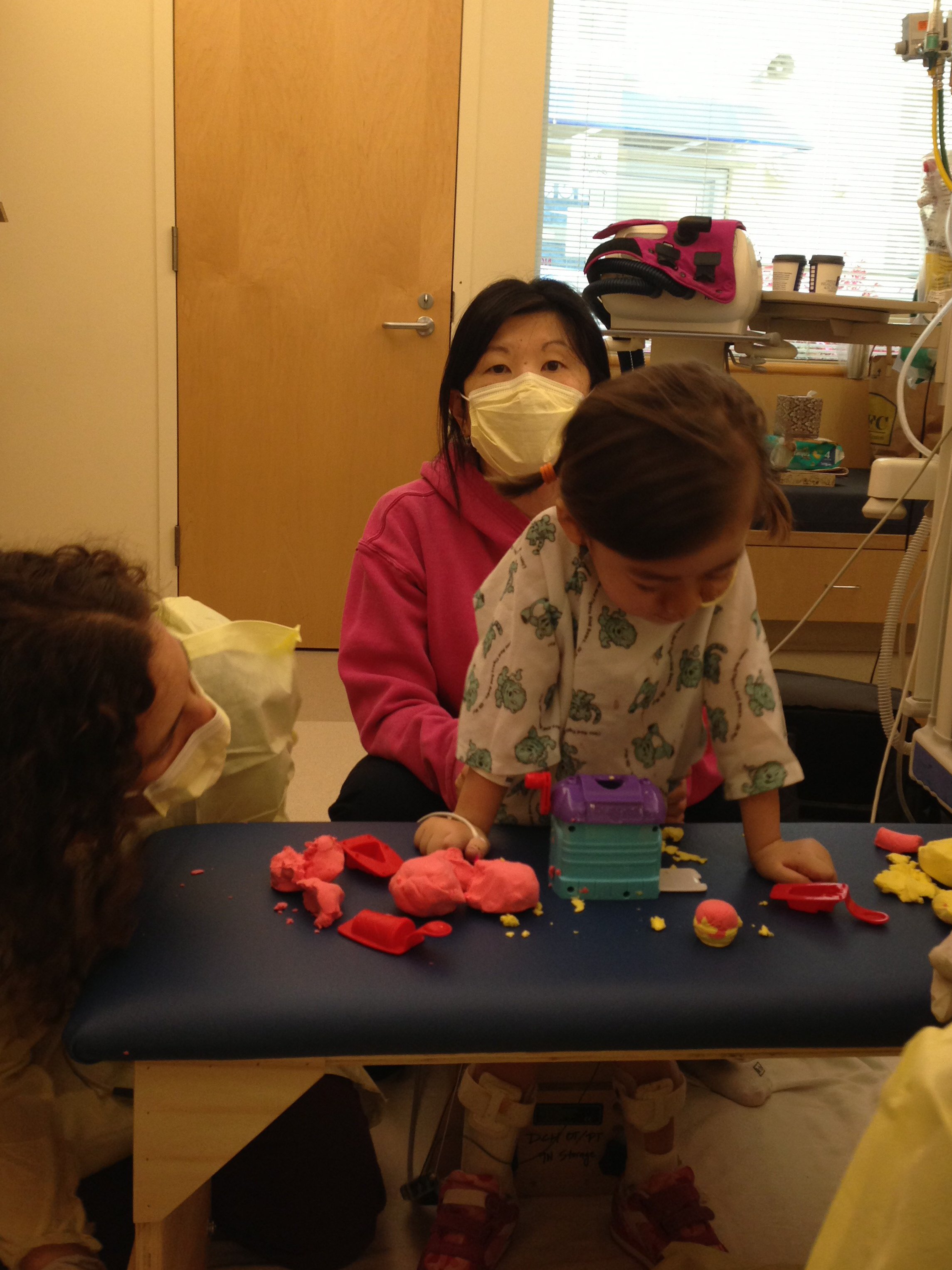
All of our hospital pictures were taken towards the end of her stays, when she was on the mend. You can see in her eyes, though, the toll it took.

Five Junes ago

was a lovely reprieve. Julianna was dying, but once acknowledged, we lived, with purpose and beauty. 

Moon-470

Photo – Capturing Grace Photography

And the next June,

four years ago today, I held her in my arms and told her she could go. Run, jump and play, little one. Go to the place where things are what they were always meant to be. You are free.


****

If having a child changes everything, losing one changes more.

Something fundamental shifts, and it cannot go back to the way it was before. Grief makes you an alien in your once familiar world. You see, hear and feel everything differently. How could it be that the sun still rises and sets, that gravity still grounds?  The seasons continue their relentless march, always onward, indifferent to my split reality. 

We’re not supposed to live with one foot in the grave, but is it more acceptable to have a part of your heart there?  Love isn’t safe, and she, with her soft pink cheeks and startling, sweet eyes, took a part of me with her. There’s no shame in it, just as there is no rising above or moving on from the death of your child. It just is. 
IMG_7112

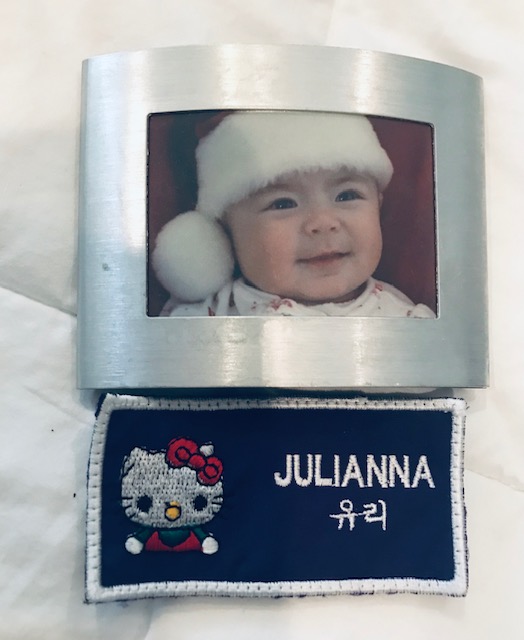
Her first Christmas. Patch from her flight suit, one of her first Halloween costumes. 

****

It’s June again,

and time for another move. We’re leaving our comfortable home with its wide halls and pale pink princess room and going back to the desert.  It’s a temporary move and much less complicated than the one seven years ago, but it’s been agonizing. It’s hard to leave her last home, the place where she was so happy. 

IMG_3570

We bought our home because it fit our Julianna needs. I thought that the view was just a bonus — but she needed it, absolutely. 


We’re moving so that I can do an HPM (Hospice Palliative Medicine) fellowship. I thought I finished my medical training twelve years ago when I graduated from  neurology residency. I didn’t know then that there would be a girl named Julianna, that she’d teach me  how to live — and how to die. I couldn’t have imagined surviving the death of my child, and I wouldn’t have believed anyone who told me that hospice would make her last months the happiest of my life. 

Snow-558

photo – Capturing Grace Photography


It happened, though. It all happened, and it has produced and demands change. The second half of my medical career will be spent with families whose lives are upended by serious illness. I know the suffering that comes from fear, and I want to help them face it, in their own time and in their own way. I think it’s what I’m supposed to do. 

****

Four years ago,

my world ended. I mourn it every day, and I take it with me, everywhere and always, for the rest of my life. 

_T7A7994

photo – Charles Gullung


Mother’s Day

Motherhood is joy, and it is pain.

Joy is easy, and it is polite. You can put it on a card and take it out to brunch.

Pain is hard, and it is ugly. You want to hide it away, but, like joy, it cannot be contained.

For the bereaved mother, there is no separation of the two. To ignore one is to deny the depth of the love you carry for the child you can no longer hold.

This Mother’s Day, I went deeper into the pain and wrote a piece for CMTRF. It wasn’t easy to write, so it may not be easy to read. It’s a part of my motherhood, though, and millions of others who know that love has a cost.

I would do it all over again, for the privilege of being her mother.


IMG_7104